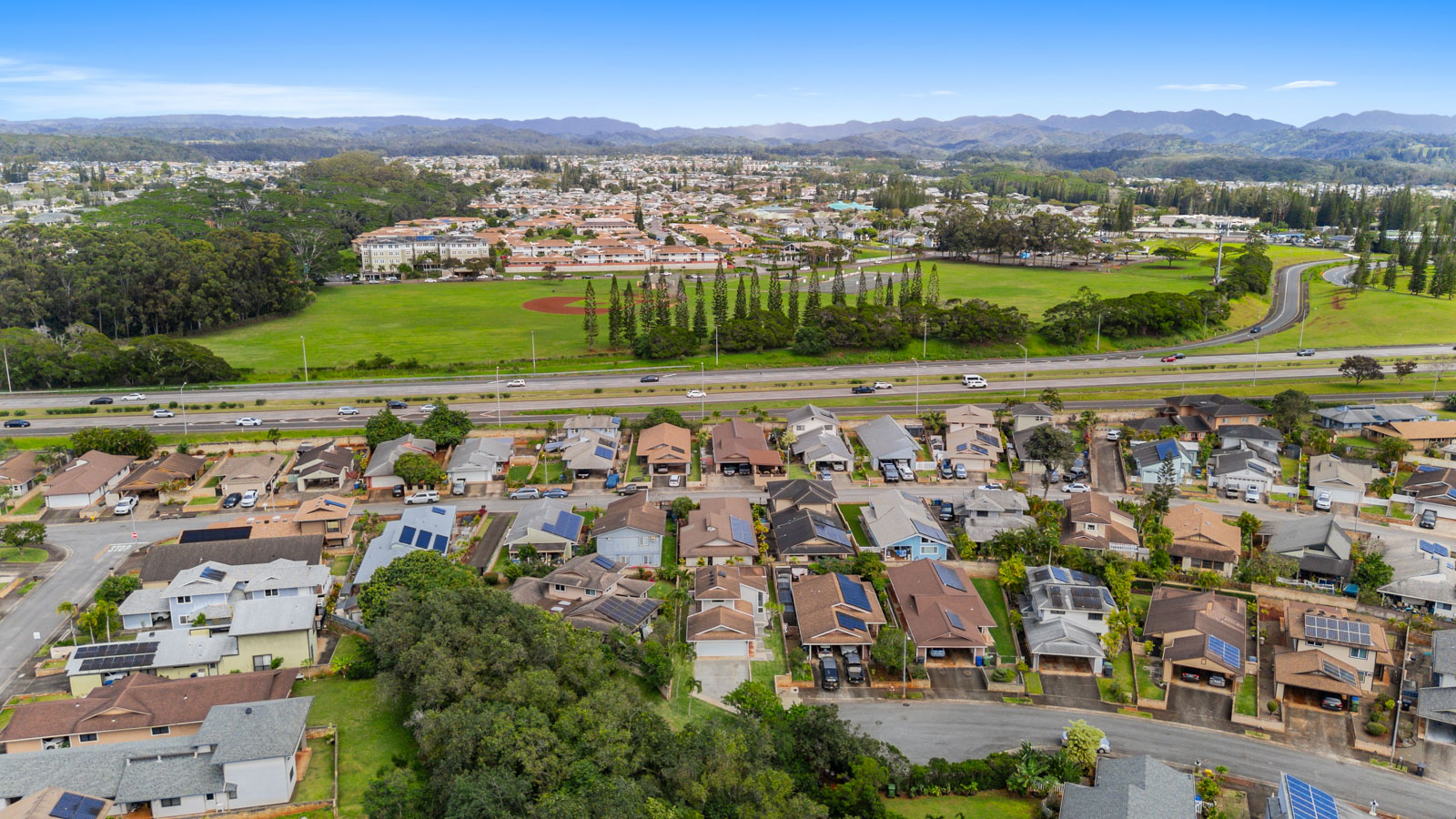
Aerial view of Mililani, Oahu - Central Oahu real estate by Your Oahu Home Team

Oahu Real Estate Market Updates, Neighborhood Guides & Homebuyer Tips

Welcome to Your Oahu Home Team's blog — your local resource for Oahu real estate market updates, neighborhood guides, and practical advice for buyers, sellers, and investors. We share insight on Mililani, Central Oahu, Kapolei, Ewa Beach, Ho'opili, and Koa Ridge, along with guidance on VA home loans, military relocation to Hawaii, and first-time homebuyer programs.

Whether you're searching for current Oahu market trends, exploring a new neighborhood, or preparing to buy or sell a home, you'll find clear, locally-focused information here to help you make confident real estate decisions.

Have a question about a specific neighborhood or property? Reach out anytime — we'd love to talk story with you.

March 26, 2026

Aiea Property Tax Guide 2026: Rates, Exemptions & Tips

Understanding property taxes is essential for any Aiea homeowner or buyer. Honolulu County sets tax rates annually, and the amount you pay depends on your property's assessed value, classification, and any exemptions you qualify for. This guide covers current tax rates, available exemptions, and practical tips to manage your property tax bill in Aiea.

We're Kristy and Austin Nakamura of Your Oahu Home Team brokered by eXp Realty. We live in Mililani and help buyers and sellers throughout Aiea. Call or text (808) 670-1548 with questions.

How Honolulu Property Taxes Work

All properties in Aiea fall under the City and County of Honolulu's jurisdiction. The Real Property Assessment Division (RPAD) assesses property values each year based on comparable sales data through the prior June 30. Assessment notices are mailed on December 15, and tax bills are sent in July for the fiscal year beginning July 1.

Your annual property tax is calculated by multiplying your net taxable value (assessed value minus exemptions) by the applicable tax rate per $1,000 of value.

2025–2026 Property Tax Rates

For the fiscal year July 1, 2025 to June 30, 2026, the key Honolulu County residential tax rates per $1,000 of net taxable value are:

  • Owner-Occupied Tier 1 (up to $1,300,000): $1.65
  • Owner-Occupied Tier 2 ($1,300,001 to $4,500,000): $1.80
  • Owner-Occupied Tier 3 (over $4,500,000): $5.75
  • Residential (non-owner-occupied): $3.50
  • Residential A Tier 1 (non-owner-occupied, up to $1,000,000): $5.87
  • Residential A Tier 2 ($1,000,001+): $8.60

Most Aiea homeowners who live in their property and have the home exemption will fall under the Owner-Occupied classification, which has the lowest rates on Oahu.

Home Exemption for Owner-Occupants

If you live in your Aiea home as your primary residence, you can apply for the homeowner exemption, which reduces your taxable value and qualifies you for the lower Owner-Occupied tax rate.

  • Under age 65: $120,000 exemption deducted from assessed value.
  • Age 65 and older: $160,000 exemption deducted from assessed value.

To qualify, you must own and occupy the property as your main home for at least 270 days per calendar year and file a claim by September 30 preceding the tax year. If you already have an active exemption on file, you generally don't need to re-apply each year.

Sample Tax Calculation for an Aiea Home

Here's an example for a typical Aiea single-family home:

  • Assessed value: $850,000
  • Home exemption (under 65): $120,000
  • Net taxable value: $730,000
  • Tax rate (Owner-Occupied Tier 1): $1.65 per $1,000
  • Annual property tax: $730 × $1.65 = $1,204.50

This is one of the lowest effective property tax rates in the nation, making Aiea and Oahu very attractive from a tax perspective.

Tips to Reduce Your Aiea Property Taxes

  • File your home exemption if you haven't already. This is the single biggest way to lower your tax bill.
  • Check your assessment notice each December. If your assessed value seems too high based on recent comparable sales, you can appeal by January 15.
  • Verify your property classification. Make sure your home is classified correctly as Owner-Occupied rather than Residential or Residential A.
  • Senior exemptions: If you're 65 or older, confirm the higher $160,000 exemption is applied to your account.
  • Disabled veteran exemption: Totally disabled veterans may qualify for a full property tax exemption. Contact the RPAD office for details.

Important Dates for Aiea Homeowners

  • September 30: Deadline to file home exemption claims for the following tax year.
  • December 15: Assessment notices mailed.
  • January 15: Deadline to file an appeal if you disagree with your assessed value.
  • July: First tax bill for the new fiscal year is mailed.
  • August 20 & February 20: Semi-annual payment due dates.

Need Help Finding the Right Home?

Search Aiea homes for sale | Contact us | (808) 670-1548

More Aiea Guides:

Explore Nearby Neighborhoods: Pearl City Property Tax Guide | Salt Lake Property Tax Guide | Moanalua Property Tax Guide

Posted in Aiea
March 26, 2026

Aiea Commute Guide 2026: Drive Times, Transit, and Transportation Tips

Aiea's central location on Oahu is one of its biggest advantages for homebuyers. Situated along the H-1 freeway corridor between Pearl City and Honolulu, Aiea offers relatively straightforward commutes compared to many other Oahu communities. This guide breaks down drive times, transit options, and commuter tips for anyone living in or considering a move to Aiea.

We're Kristy and Austin Nakamura of Your Oahu Home Team brokered by eXp Realty. We live in Mililani and commute through Aiea regularly. Call or text (808) 670-1548 with questions.

Aiea's Location on Oahu

Aiea sits on the south shore of Oahu, about 8 miles west of Downtown Honolulu. The H-1 freeway runs directly through the community, with multiple on/off ramps providing access to both the Honolulu-bound and West Oahu-bound lanes. Moanalua Road is the main arterial through lower Aiea, while Aiea Heights Drive connects the hillside neighborhoods to the freeway below.

Drive Times from Aiea

Here are approximate commute times from central Aiea during typical conditions:

  • Downtown Honolulu: 15–25 minutes (H-1 East). During peak morning rush (6:30–8:30 AM), expect 30–45 minutes.
  • Joint Base Pearl Harbor-Hickam: 10–15 minutes. Quick and easy via the Kamehameha Highway or H-1.
  • Daniel K. Inouye International Airport (HNL): 10–15 minutes via H-1.
  • Kapolei / Second City: 20–30 minutes via H-1 West.
  • Waikiki: 20–35 minutes via H-1 East.
  • University of Hawaii Manoa: 20–30 minutes.
  • Mililani: 15–20 minutes via H-2 North.
  • Kailua: 25–35 minutes via H-3 or Likelike Highway.

Skyline Rail Access

Oahu's Skyline rail system is a game-changer for Aiea commuters. The Halawa/Aloha Stadium station is located just south of Aiea along Kamehameha Highway. This station connects to the East Kapolei and Pearl Highlands stations already in service, with expansion toward downtown Honolulu and Ala Moana underway. Once complete, residents will have a car-free option from near Aiea into the heart of Honolulu, significantly easing the daily commute.

TheBus Service

Aiea is well served by TheBus, Oahu's public transit system. Multiple routes run through Pearlridge Center, which acts as a major transit hub. Key routes connect to Downtown Honolulu, Pearl City, Salt Lake, and the airport. Pearlridge is one of the busiest bus transfer points on Oahu. Monthly bus passes are an affordable commuting option at $80/month for adults.

Commuter Tips for Aiea Residents

  • Leave before 6:15 AM to beat the worst of the H-1 eastbound morning rush into Honolulu.
  • The Moanalua Freeway (H-201) is an alternate route that bypasses the main H-1 merge near the airport.
  • Aiea Heights residents should budget an extra 5–10 minutes to get down from the hillside to the H-1 on-ramp.
  • Carpooling qualifies for HOV lanes on H-1, which can save significant time during peak hours.
  • Use the Skyline rail from Halawa station for commutes to Honolulu once the full line opens — park at the station and ride in.

How Aiea Compares to Other Communities

Compared to Kapolei or Ewa Beach, Aiea is significantly closer to Honolulu and the airport, resulting in shorter commutes. Compared to Mililani, Aiea offers quicker Honolulu access but slower access to the North Shore. If commute time is a priority in your home search, Aiea is one of the best-positioned communities on the island.

Need Help Finding the Right Home?

Search Aiea homes for sale | Contact us | (808) 670-1548

More Aiea Guides:

Explore Nearby Neighborhoods: Pearl City Commute Guide | Salt Lake Commute Guide | Moanalua Commute Guide

Posted in Aiea
March 26, 2026

Aiea Schools Guide 2026: Elementary, Middle, and High Schools for Families

If you're relocating to Aiea or buying a home in the area, understanding the local school system is essential. Aiea is served by the 'Aiea Complex — a cluster of public schools within the Hawaii DOE's Central Oahu District. This guide covers every school from elementary through high school.

We're Kristy and Austin Nakamura of Your Oahu Home Team brokered by eXp Realty, based in nearby Mililani. Questions? Call or text (808) 670-1548 or visit our Aiea Real Estate Guide.

How the 'Aiea Complex Works

Hawaii's public schools are organized by complexes — feeder systems where elementary schools funnel into a shared intermediate, then one high school. The 'Aiea Complex includes 5 elementary schools, 1 intermediate, and 1 high school. Your child's assignment depends on your home address. When buying a home in Aiea, we always confirm which school zone a property falls in.

Aiea Elementary Schools

'Aiea Elementary School

The core community school serving central Aiea, grades K–6, with an active parent-teacher community and diverse student body.

Alvah A. Scott Elementary School

Serves the Newtown area, popular with first-time buyers and military families. Conveniently located near the H-1 corridor.

Gustav H. Webling Elementary School

Serves lower Aiea and Waimalu, K–6. One of the more affordable school zones given the condo-heavy neighborhood.

Pearl Ridge Elementary School

Consistently one of the top-performing elementaries in the area with ELA proficiency around 70% and math proficiency around 63%. Homes in this zone sell at a premium.

Waimalu Elementary School

Serves the Waimalu neighborhood, K–6, with a community-oriented culture and affordable housing options nearby.

'Aiea Intermediate School (Grades 6–8)

All five elementaries feed into 'Aiea Intermediate, serving 700–900 students. The school holds a 4-star rating and offers strong academics, sports, performing arts, and STEM programs.

'Aiea High School (Grades 9–12)

'Aiea High School, home of Na Ali'i, opened in 1961 on a 15-acre campus overlooking Pearl Harbor. Key stats: 89.5% graduation rate, full WASC accreditation, ~900 students. Offers AP classes, CTE pathways, and competitive athletics.

Private and Charter School Options

Families also consider: Saint Elizabeth School (Catholic K–8 nearby), Mililani schools (see our Mililani Schools Guide), and Honolulu private schools like Punahou and 'Iolani (15–20 min via H-1).

School Zone Tips for Homebuyers

  • Always verify the zone before buying. We confirm zones for every buyer.
  • Pearl Ridge Elementary commands a premium. Budget accordingly.
  • Newtown is popular with military families for Scott Elementary and highway proximity.
  • All students converge at Aiea Intermediate and High School regardless of elementary.

Ready to Find a Home in the Right School Zone?

Search Aiea homes for sale | Contact us | (808) 670-1548

More Aiea Guides:

Explore Nearby Neighborhoods: Pearl City Schools Guide | Salt Lake Schools Guide | Moanalua Schools Guide

Posted in Aiea
March 26, 2026

Ho'opili vs Koa Ridge 2026: Comparing Oahu's Two Biggest New Communities

Ho'opili and Koa Ridge are Oahu's two largest master-planned communities currently under development. Both offer new construction homes, modern amenities, and a vision for island living — but they differ significantly in location, size, transit access, and lifestyle. Here's how they compare in 2026 to help you decide which community fits your needs.

Quick Comparison Overview

Factor Ho'opili Koa Ridge
Location Ewa Beach / East Kapolei Central Oahu (Waipio/Mililani)
Developer D.R. Horton Hawaii Castle & Cooke Homes Hawaii
Total Planned Homes ~11,750 ~3,500
Acreage ~1,600 acres ~768 acres
Rail Access Yes (Honouliuli Station on-site) No direct rail access
Entry-Level Pricing Low $600,000s (townhomes) Mid $300,000s (condos)
Nearest Beach ~10 min to White Plains Beach ~20-25 min to beaches

Location and Setting

Ho'opili sits in the heart of West Oahu between Kapolei and Ewa Beach, placing residents close to the growing Kapolei employment centers, Ka Makana Ali'i shopping, and Ewa Beach. The community is designed as a transit-oriented development centered around the Honolulu Skyline rail system.

Koa Ridge occupies a Central Oahu location between Mililani and Waipio, adjacent to the H-2 freeway. The elevated setting offers mountain views and cooler temperatures, with easy access to both Honolulu and the North Shore.

Home Types and Pricing

Ho'opili offers the widest range of housing on Oahu — from studios and flex homes to large single-family residences with ADUs. This variety makes it accessible to first-time buyers and investors alike. Ho'opili neighborhoods include Kohina, Ilima, Kanalani, Ikena, and many more, with prices ranging from the low $600,000s for townhomes to over $1 million for single-family homes.

Koa Ridge focuses on traditional single-family homes and townhomes with generally larger floor plans and lot sizes. Neighborhoods include Nanea (detached single-family), Luana (townhomes), Ke'olu (affordable condos), and Lau Le'a (studios to 2-bedrooms starting in the mid $300,000s).

Transportation and Commute

This is Ho'opili's biggest advantage. The on-site Honouliuli Station provides direct Skyline rail service to Waipahu, Pearl City, Pearl Harbor, the airport, and the Kalihi Transit Center — with full connectivity to downtown Honolulu planned. For military families stationed at JBPHH, this is a significant benefit.

Koa Ridge relies on H-2 freeway access and TheBus for commuting. While the Central Oahu location provides good access to multiple directions, there is no rail service available.

Amenities Comparison

Ho'opili Amenities

  • 7 planned recreation centers with pools
  • 9 planned community parks
  • 200+ acres of urban agriculture (Ho Farms, community gardens)
  • 5 planned schools within the community
  • Planned commercial retail, restaurants, and grocery
  • Multiple community centers (SoHo Community Center already open)

Koa Ridge Amenities

  • 7.5-mile Ho'ala Trail pedestrian and bike path
  • Community center with recreational facilities
  • Planned elementary school and community park
  • Commercial gateway with grocery, retail, restaurants, and medical
  • 28-acre planned medical complex
  • Hale Lau Koa cultural gathering space

Schools

Ho'opili is building five new schools within the development, providing walkable education from elementary through high school. Koa Ridge benefits from proximity to established Mililani and Waipio school districts, which rank among the highest-rated on Oahu.

HOA Fees

Both communities have HOA fees that vary by neighborhood. Ho'opili master association fees are generally modest, with additional neighborhood-specific fees. Koa Ridge master association fees are approximately $67/month, with neighborhood fees ranging from $50/month (Nanea) to $378-$600/month for condo units.

Which Community Is Right for You?

Choose Ho'opili if you want:

  • Direct rail access to Honolulu and JBPHH
  • Maximum housing variety and price range options
  • Proximity to Kapolei and West Oahu employment
  • Beach access within 10 minutes
  • A larger-scale community with extensive commercial plans

Choose Koa Ridge if you want:

  • Central Oahu location with mountain views
  • Proximity to top-rated Mililani schools and amenities
  • Generally larger lots and more traditional neighborhood feel
  • Quick access to both Honolulu and the North Shore via H-2
  • A quieter, more suburban setting

Ready to explore homes in either community? Browse Oahu listings or contact us for a personalized tour of Ho'opili or Koa Ridge.

Posted in Ho'opili
March 26, 2026

Ho'opili Neighborhoods Guide 2026: Villages, Home Types, and What to Expect

Ho'opili is one of Oahu's largest master-planned communities, with over a dozen distinct neighborhoods (or "villages") being developed by D.R. Horton across approximately 1,600 acres in Ewa Beach. Each neighborhood offers different home types, price points, and lifestyles. Here's your complete guide to Ho'opili's neighborhoods in 2026.

How Ho'opili Is Organized

Unlike older subdivisions with a single home style, Ho'opili is built as a collection of villages, each with its own character. The community is designed as a transit-oriented development (TOD) centered around the Honolulu Skyline rail stations, with neighborhoods radiating outward from mixed-use centers. The full buildout will include approximately 11,750 homes over a 20-year development timeline.

Single-Family Neighborhoods

Kanalani

One of Ho'opili's established single-family neighborhoods, Kanalani features 3 to 4-bedroom homes ranging from approximately 1,219 to 1,996 square feet. Some floor plans include an ADU (accessory dwelling unit) option, making this an attractive choice for multigenerational families or those seeking rental income potential. Homes in Kanalani are typically priced around the $1 million range.

Ikena

Ikena offers modern single-family homes with open-concept living spaces. This neighborhood also features an ADU home option, giving buyers flexibility for extended family or rental use. The contemporary designs reflect Ho'opili's focus on functional, modern Hawaii living.

Ho'oulu

Ho'oulu features modern plantation-style single-family homes with 2 and 3 bedrooms, ranging from 868 to 1,144 square feet. With 68 homes in this neighborhood, Ho'oulu offers a more intimate community feel within the larger Ho'opili development.

Iliahi

Built starting in 2018, Iliahi includes both duplexes and single-family homes with ADU units. This neighborhood provides entry points for buyers looking at Ho'opili's single-family options at various price levels.

Townhome and Condo Neighborhoods

Kohina

Located at the gateway entrance to Ho'opili, Kohina is the community's first transit-oriented development neighborhood — just steps from the Skyline rail station. Kohina features approximately 276 multi-family homes across 40 unique floor plans, including:

  • Market-priced homes
  • Affordable housing units
  • Townhomes with lanais
  • FLEX homes and commercial spaces
  • Studios (residential and commercial)

Unit sizes range from 1-bedroom (694 sq ft) to 3-bedroom (1,286 sq ft), with FLEX homes up to 1,750 sq ft.

Ilima

One of Ho'opili's most popular neighborhoods, Ilima offers 76 townhomes with a key differentiator: fenced private yards. This makes Ilima especially appealing for pet owners and families who want outdoor space. Seven floor plans range from 935 to 1,400 square feet, with split-level designs and one-car garages. Ilima also includes affordable housing units available through lottery.

'Ahakea (Pohaku Estates)

Part of Ho'opili's newest product line called GenHomes Ho'opili, 'Ahakea is a mixed-use condominium community. The first phase features single-family detached condominium homes with four two-story floor plans offering 2 and 3-bedroom layouts from 880 to 997 square feet. Every home includes smart home technology and split AC.

Uluwehi

Uluwehi is a condominium community designed for convenient modern living, positioned within Ho'opili's growing footprint near planned shopping and dining options.

Alana (Pohaku Estates)

Alana features 187 homes with one-, two-, and three-bedroom floor plans, offering diverse options for singles, couples, and families within the Pohaku Estates section of Ho'opili.

Choosing the Right Ho'opili Neighborhood

When selecting a neighborhood within Ho'opili, consider these factors:

  • Budget — Condos and townhomes start lower; single-family homes with ADUs command premium prices
  • Lifestyle — Want a yard? Look at Ilima or single-family villages. Prefer walkability to rail? Consider Kohina
  • Family size — Larger families should explore Kanalani or Ikena for 3-4 bedroom options
  • Investment potential — ADU-equipped homes in Kanalani and Ikena offer rental income opportunities
  • HOA fees — Fees vary by neighborhood; see our Ho'opili HOA fees guide for details
  • Schools — All neighborhoods feed into the same Ho'opili school district

What's Still Coming to Ho'opili

As a 20-year master plan, Ho'opili continues to expand. Future development includes:

  • Additional neighborhoods and home types
  • More recreation centers and pools (7 planned total)
  • Commercial retail, restaurants, and grocery stores
  • Additional parks and green spaces (9 planned total)
  • Completion of all five planned schools
  • Full Skyline rail connectivity to Honolulu

Buying early in a developing community means potential appreciation as amenities and infrastructure are completed. For current Ho'opili listings, browse our updated inventory or search all Oahu homes for sale.

Posted in Ho'opili
March 26, 2026

Ho'opili Parks and Recreation Guide 2026: Community Amenities, Green Spaces, and Outdoor Living

Ho'opili in Ewa Beach is one of Oahu's most amenity-rich master-planned communities, with an expanding network of parks, recreation centers, pools, and green spaces designed for active outdoor living. Whether you're raising a family or looking for a community with resort-style amenities, here's your complete guide to Ho'opili's parks and recreation offerings in 2026.

Community Parks in Ho'opili

Ho'opili is planned for a total of nine parks throughout the community, with several already open and enjoyed by residents. Each park offers a unique experience and character.

Jim Schuler Pa'ani Park

One of Ho'opili's signature parks, Jim Schuler Pa'ani Park features:

  • Playground with climbing structures for children of all ages
  • Pickleball courts for one of Hawaii's fastest-growing sports
  • Basketball courts for pickup games and organized play
  • Pavilion with shaded seating areas
  • Open grassy fields adjacent to the 4J Soccer Fields
  • Restrooms on-site for convenience

Konane Neighborhood Park

Located at the corner of Iwikuamo'o Street and Keahumoa Parkway, Konane Park is a family favorite known as the "Fruit Park" thanks to its creative play structures shaped like tropical fruits. Features include:

  • Apple-shaped slide and pineapple play structures
  • Turf-covered playground (great for barefoot kids)
  • Large grass area for open play
  • Reservable pavilion with approximately 8 tables and 40 chairs
  • Water fountain

Bark & Ride Park

A unique dual-purpose park located on the mountainside of Kohina, Bark & Ride caters to both pets and toddlers:

  • Dog park — Fully gated with ample running space, benches, and a drinking fountain
  • Tot lot — Low-to-the-ground play structures with astroturf and soft padding

The Pearl Park

One of Ho'opili's newest additions (opened 2025), The Pearl Park features open green spaces, walking paths, and a playground — expanding outdoor options for residents in the growing community.

Recreation Centers and Pools

SoHo Community Center

The South Ho'opili (SoHo) Community Center is the social hub of the community, offering:

  • Swimming pool — Open to all Ho'opili residents and guests
  • KUAPO multi-purpose room — Equipped with tables, chairs, TV, kitchen amenities, and WiFi for parties and events
  • Lanais and outdoor gathering spaces
  • SoHo Park — Adjacent open park with reservable tent zones (A, B, and C)

The center's design reflects Ewa's agricultural heritage with contemporary plantation-inspired architecture using industrial materials and exposed structures.

Future Recreation Centers

Ho'opili is planned for seven total recreation centers with pools across the community's approximately 1,600 acres. As new phases are completed by D.R. Horton, additional recreation facilities will open, ensuring every neighborhood has convenient access to amenities.

Green Spaces and Agriculture

What sets Ho'opili apart from other Oahu communities is its integration of agriculture and green living:

  • Grown in Ho'opili program — Edible and usable landscaping planted throughout the community instead of purely decorative plants
  • Urban gardens — Fruiting trees and urban orchards in single-family home yards
  • Commercial farming — Ho Farms operates within the community, supporting Oahu's sustainable agriculture
  • Planned botanical garden — An agricultural botanical garden is expected to further enhance green spaces

Nearby Parks and Beaches

Beyond the community gates, Ho'opili residents enjoy easy access to Ewa Beach's outdoor amenities:

  • Ewa Beach Park — Sandy beach with views of Diamond Head, picnic areas, playground, basketball courts, and baseball fields
  • Ewa Beach Community Park — Sports courts, skate park, playground, and community center programs
  • Salvation Army Kroc Center — Nearby facility with additional recreation programs

What Makes Ho'opili's Amenities Stand Out

Compared to other Ewa Plain communities, Ho'opili's parks and recreation package is notable for several reasons:

  • Scale — Nine planned parks and seven recreation centers is among the most extensive on Oahu
  • Variety — From dog parks to pickleball courts to agricultural gardens, there's something for every lifestyle
  • Walkability — Parks are distributed throughout the community so most homes are within walking distance
  • Community programming — Reservable pavilions and event spaces foster neighborhood connections
  • Skyline rail access — The Honouliuli Station connects residents to island-wide recreation

Living the Outdoor Lifestyle at Ho'opili

For buyers considering Ho'opili real estate, the community's parks and recreation amenities are a major draw — especially for families with children. The combination of resort-style pools, creative playgrounds, agricultural programs, and proximity to Ewa Beach creates an outdoor lifestyle that's hard to match in West Oahu.

Ready to explore homes in Ho'opili? Browse available listings or get a home valuation if you're considering selling in the area.

Posted in Ho'opili
March 26, 2026

Ho'opili Commute and Skyline Rail Guide 2026: Drive Times, Transit, and Transportation

One of Ho'opili's biggest advantages over other Oahu communities is direct access to the Honolulu Skyline rail system. For buyers considering Ho'opili in Ewa Beach, understanding commute options and drive times is essential. Here is everything you need to know about getting around from Ho'opili in 2026.

Skyline Rail at Ho'opili: The Honouliuli Station

The Honouliuli Station (also known as the Ho'opili station) is located within the community and provides direct rail access for residents. Key details:

  • Location: Within the Ho'opili community, near Keahumoa Parkway
  • Park-and-ride: 344-space lot, free for transit riders
  • Opened: June 30, 2023
  • Bus connections: TheBus routes connect at the station for transfers to Ewa Beach, Kapolei, Makakilo, and surrounding communities

The station connects riders west to the Kualaka'i (East Kapolei) terminus and east toward Pearl Harbor, Honolulu International Airport, and eventually Ala Moana Center once the full 19-station, 18.9-mile line is complete.

Skyline Stations Near Ho'opili

The western segment of Skyline currently includes these stations closest to Ho'opili:

  1. Kualaka'i — East Kapolei (terminus)
  2. Keone'ae — UH West Oahu
  3. Honouliuli — Ho'opili (your home station)
  4. Ho'ae'ae — West Loch
  5. Pouhala — Waipahu Transit Center

From Honouliuli station, riders can continue east through Pearl City, Aiea, and eventually to Aloha Stadium, the airport, and downtown Honolulu as additional stations open.

Drive Times From Ho'opili

For residents who drive, here are approximate commute times from Ho'opili during typical conditions:

  • Ka Makana Ali'i Mall — 5 minutes
  • Joint Base Pearl Harbor-Hickam — 20–30 minutes
  • Pearl City / Aiea — 20–30 minutes
  • Honolulu International Airport — 25–35 minutes
  • Downtown Honolulu — 35–50 minutes
  • Schofield Barracks — 30–40 minutes
  • North Shore (Haleiwa) — 45–60 minutes

Ho'opili is accessible via the H-1 Freeway and Farrington Highway. Morning rush hour traffic heading east toward Honolulu can add significant time, which is one reason the Skyline rail is such a valuable commute alternative for Ho'opili residents.

Why the Rail Matters for Ho'opili Buyers

Having a rail station within your community is a major quality-of-life advantage. It means less time sitting in H-1 traffic, lower transportation costs, and a more predictable commute. For military families stationed at Pearl Harbor-Hickam or commuters working in town, the rail provides a reliable alternative to driving.

The transit-oriented design of Ho'opili also means that as more retail, dining, and services are built within the community, residents may be able to handle many daily errands without getting in a car at all.

Bus Service and Other Transportation

TheBus routes serve the Ho'opili area and connect at the Honouliuli rail station for transfers. The community's wide sidewalks and bike paths also support walking and cycling for local trips. As Ho'opili continues to develop, additional bus service and transportation infrastructure are expected to expand.

Considering Ho'opili for your next home? Visit our buying page or call us at (808) 670-1548 to discuss commute options and find the right neighborhood for your lifestyle.

Posted in Ho'opili
March 26, 2026

Ho'opili Schools Guide 2026: Elementary, Middle, and High Schools for Families

One of the biggest questions families ask before buying at Ho'opili is about the schools. As a growing master-planned community in Ewa Beach and East Kapolei, Ho'opili is part of the Campbell-Kapolei school complex and has plans for five new schools within the development. Here is what parents need to know about Ho'opili schools in 2026.

Current Schools Serving Ho'opili Students

As of 2026, Ho'opili students attend existing schools in the Campbell-Kapolei complex area. The primary schools currently serving Ho'opili families include:

Elementary Schools

Ho'okele Elementary School is one of the newer schools built to serve the growing Ewa and Ho'opili area. It opened in recent years and provides education for students in kindergarten through fifth grade. The school is located within reasonable distance of many Ho'opili neighborhoods.

Kapolei Elementary School also serves students in the surrounding area, located at 91-1119 Kamaaha Loop in Kapolei. It covers kindergarten through fifth grade in the Campbell-Kapolei complex.

Middle School

Honouliuli Middle School is the middle school that serves many Ho'opili students. It was one of the newer schools built to accommodate the rapid growth in the Ewa and East Kapolei corridor. The school is conveniently located near the Ho'opili community.

High School

Kapolei High School serves high school students from Ho'opili, Kapolei, Barbers Point (Kalaeloa), Honokai Hale, Ko'Olina, and Makakilo. KHS opened in 2000 and maintains an enrollment of around 2,000 students. The school offers academies in Arts and Communications, Business, Health, Public and Human Services, Natural Resources, Building and Construction, and Engineering. Kapolei High also has a Marine Junior Reserve Officers' Training Corps program, which is relevant for military families in the area.

Planned Schools Within Ho'opili

Ho'opili's master plan includes five new schools ranging from pre-kindergarten through high school that will be built within the community as it continues to develop. Key planned additions include:

  • East Kapolei Elementary — Planned to open by the 2028-2029 school year
  • New high school — Planned for construction by 2028
  • Additional elementary and middle school facilities as the community grows

Having schools within walking distance of homes is a major selling point for families considering Ho'opili. As these schools come online, students will have shorter commutes and more options right in their own community.

Private and Charter School Options Nearby

In addition to public schools, families in Ho'opili have access to several private and charter schools in the greater Kapolei and Ewa Beach area. These include various preschool programs, religious schools, and charter options that serve the West Oahu region.

What This Means for Buyers

For families with school-age children, the school situation at Ho'opili is evolving quickly in a positive direction. The current schools are solid options, and the planned additions will only improve the experience as the community matures. If schools are a priority for your family, we recommend checking the latest school assignments with the Hawaii Department of Education, as boundaries can shift as new schools open.

As your local agents, we can help you understand which neighborhoods within Ho'opili are zoned for which schools and how upcoming school openings may affect your decision. Whether you are buying a home or exploring new construction options, we factor school proximity into our recommendations.

Questions about Ho'opili schools or buying in the area? Call or text us at (808) 670-1548 or email info@youroahuhome.com.

Posted in Ho'opili
March 26, 2026

Ho'opili HOA Fees 2026: What Buyers Need to Know About Costs and Community Rules

Understanding HOA fees and community rules is one of the most important steps before buying a home at Ho'opili in Ewa Beach. As a master-planned community developed by D.R. Horton, Ho'opili has a homeowners association structure that maintains the community standards and shared amenities residents enjoy. Here is what buyers need to know about Ho'opili HOA fees in 2026.

How Much Are Ho'opili HOA Fees?

Every home at Ho'opili pays a master association fee of approximately $65 per month. On top of that, individual neighborhoods may have additional sub-association fees depending on the property type and shared maintenance responsibilities. Total monthly HOA fees across Ho'opili range from as low as $65 for traditional single-family neighborhoods up to $265 to $415 for townhome and FLEX communities.

Ho'opili HOA Fees by Neighborhood

Currently Selling Neighborhoods

  • Ahakea (GenHomes) — Detached condos. Master fee ~$82 + neighborhood fee $60–$68 = $142–$150/month
  • Kapili at Pohaku Estates — Townhomes. Master fee ~$65 + neighborhood fee $200–$275 = $265–$340/month
  • Molehu at Pohaku Estates — Single-family CPR. Master fee ~$65 + neighborhood fee $126–$158 = $191–$223/month
  • Noho Papa at Pohaku Estates — Single-family. Master fee ~$65 + neighborhood fee $150–$200 = $215–$265/month
  • Alana at Pohaku Estates — Townhomes and FLEX. Master fee ~$65 + neighborhood fee $200–$350 = $265–$415/month

Sold-Out Neighborhoods (Resale Market)

  • Ho'oulu, Iliahi, Kanalani, Ikena — Single-family homes. Master fee only = ~$65/month
  • Kohina — Townhomes and condos. Total = ~$215–$365/month
  • Ilima — Townhomes. Total = ~$215–$315/month

What Do Ho'opili HOA Fees Cover?

Ho'opili HOA fees typically cover:

  • Maintenance of common areas and landscaping
  • Community parks and recreational facilities including pools and recreation centers
  • Street lighting and road maintenance within the community
  • Community event coordination
  • Reserve funds for future maintenance and capital improvements

Neighborhoods with higher sub-association fees typically receive additional services such as exterior building maintenance, shared parking area upkeep, and exclusive neighborhood amenities.

Ho'opili Community Rules and Design Guidelines

Like most master-planned communities in Hawaii, Ho'opili has design guidelines and community rules that all homeowners agree to follow. These typically include:

  • Exterior maintenance standards — Homes must be kept in good condition with approved paint colors and materials
  • Landscaping requirements — Yards and common areas must be maintained according to community standards
  • Parking regulations — Specific rules about where vehicles can be parked and restrictions on commercial vehicles
  • Noise guidelines — Quiet hours and general noise expectations for a family-friendly community
  • Pet policies — Rules about pet types, sizes, and behavior in common areas

These rules help maintain property values and ensure a pleasant living environment for all residents.

How Ho'opili HOA Fees Compare to Other Oahu Communities

Ho'opili's HOA fees are competitive with other new construction communities on Oahu:

  • Ho'opili — $65–$415/month depending on property type
  • Koa Ridge (Central Oahu) — $150–$400/month
  • Ka'ulu by Gentry (Kapolei) — $100–$200/month
  • Ward Village (Honolulu) — $600–$1,500+/month

For single-family buyers, Ho'opili offers some of the lowest HOA fees among new construction communities on the island at just $65 per month for the master association.

What Buyers Should Know Before Purchasing

Before buying at Ho'opili, make sure to:

  • Request the most current HOA fee schedule for the specific neighborhood you are considering
  • Review the CC&Rs (covenants, conditions, and restrictions) carefully
  • Ask about any upcoming special assessments or planned fee increases
  • Understand the difference between the master association fee and any sub-association fees
  • Factor HOA fees into your total monthly housing cost when calculating affordability

As your agents, we help buyers understand these costs and factor them into the full picture when evaluating Ho'opili homes. Whether you are buying new construction directly from D.R. Horton or purchasing a resale home, we walk you through every line item so there are no surprises.

Ready to explore Ho'opili? Visit our buying page to learn about the home buying process on Oahu, or call us at (808) 670-1548 to discuss your options.

Posted in Ho'opili
March 26, 2026

Mililani Real Estate Market 2026: Prices, Trends, and What Buyers Need to Know

Mililani Real Estate Market 2026: Prices, Trends, and What Buyers Need to Know

The Mililani real estate market continues to be one of the most active and desirable on Oahu heading into 2026. Whether you're a first-time buyer, a military family on PCS orders, or an investor looking at central Oahu, understanding the current market conditions will help you make informed decisions.

We're Kristy and Austin Nakamura of Your Oahu Home Team brokered by eXp Realty. We live in Mililani and work this market daily. Here's our honest assessment of where things stand and what to expect.

Current Market Overview

Mililani's real estate market in 2026 is characterized by steady demand, limited inventory, and prices that have remained resilient despite national market fluctuations. The community's appeal to both local buyers and military families creates consistent demand year-round.

Key market indicators:

  • Median single-family home price: Approximately $950,000-$1,050,000
  • Median townhome/condo price: Approximately $500,000-$650,000
  • Average days on market: 20-40 days for properly priced homes
  • Inventory levels: Low, with limited new construction in the area

Mililani Town vs. Mililani Mauka

Understanding the difference between Mililani's two main areas is essential for buyers:

Mililani Town

The original development, Mililani Town features a mix of single-family homes, townhomes, and condos built primarily from the 1970s through the 1990s. Homes here tend to be more affordable due to their age, though many have been well maintained or renovated. The area is closer to the freeway and commercial centers.

Mililani Mauka

The newer expansion area developed from the late 1990s onward. Homes are generally larger and more modern, with higher price points. Mililani Mauka sits at a slightly higher elevation, which can mean cooler temperatures and better trade wind exposure. There are fewer townhomes and condos in Mauka compared to Town.

Property Types and Price Ranges

Single-Family Homes

Single-family homes make up a large portion of Mililani's housing stock. Prices vary widely based on location, size, condition, and lot size:

  • Entry-level (older, smaller homes): $800,000-$900,000
  • Mid-range (updated 3-4 bedroom): $950,000-$1,100,000
  • Premium (larger lots, renovated, Mauka): $1,100,000-$1,400,000+

Townhomes

Townhomes are popular among first-time buyers and military families. Several complexes throughout Mililani Town offer 2-3 bedroom units:

  • Older complexes: $500,000-$600,000
  • Newer or renovated units: $600,000-$750,000

Condos

Condo options provide the most affordable entry point into Mililani:

  • 1-2 bedroom units: $350,000-$500,000
  • Larger units or newer complexes: $500,000-$600,000

Ready to see what's currently available? Search Mililani homes for sale or learn about the buying process.

What's Driving Demand in Mililani

Several factors keep Mililani's market competitive:

  • Military demand: Proximity to Schofield Barracks and other bases creates year-round demand from PCS families.
  • School quality: Mililani's top-rated public schools attract families from across the island.
  • Community amenities: The MTA recreation facilities, parks, and family-friendly environment are major draws.
  • Central location: Commute access to multiple employment centers across Oahu.
  • Limited new development: Very little vacant land remains for new construction, which supports existing home values.

Buying Tips for the Mililani Market

Get Pre-Approved First

In a competitive market, having your financing in order before you start looking is essential. VA loans are common in Mililani and sellers are generally comfortable with them. Conventional loans with strong pre-approval letters can also be competitive.

Understand Total Costs

Beyond the purchase price, factor in property taxes, MTA and HOA fees, and the overall cost of living in your budget calculations.

Work with a Local Agent

Mililani has unique characteristics that out-of-area agents may miss. Knowing which streets flood, which complexes have upcoming special assessments, and which neighborhoods get the best trade winds can save you thousands and prevent headaches.

Be Ready to Act

Well-priced homes in desirable locations can go under contract within days. Have your pre-approval ready, know your must-haves versus nice-to-haves, and be prepared to write a strong offer quickly.

Selling Your Mililani Home

If you're thinking about selling your Mililani home, the current market conditions are favorable for sellers. Low inventory means well-prepared homes attract strong offers. Key preparation steps include addressing deferred maintenance, ensuring your home shows well, and pricing correctly based on recent comparable sales in your specific neighborhood.

Investment Potential

Mililani has strong rental demand, particularly from military families. If you're considering an investment property, townhomes and condos in Mililani Town tend to offer the best cash flow potential. Single-family homes offer stronger appreciation but may have tighter rental yields.

Let Us Help You Navigate the Mililani Market

Whether you're buying your first home, selling to move up, or investing in Mililani real estate, we have the local expertise to guide you. As Mililani residents and active agents in this market, we can provide the insights you need to make confident decisions.

Contact us today to discuss your real estate goals.

Related Resources

Posted in Mililani