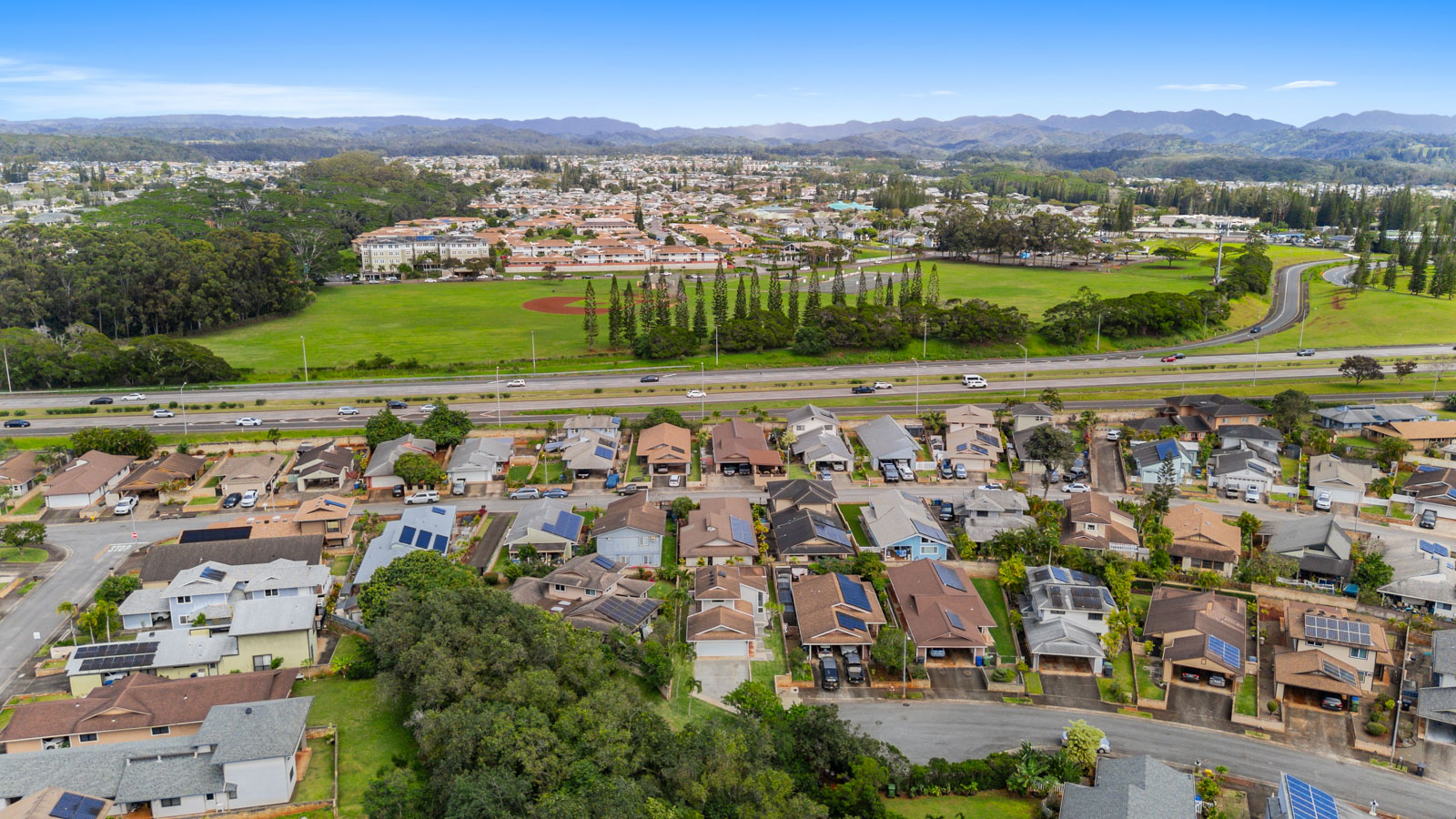
Aerial view of Mililani, Oahu - Central Oahu real estate by Your Oahu Home Team

Oahu Real Estate Market Updates, Neighborhood Guides & Homebuyer Tips

Welcome to Your Oahu Home Team's blog — your local resource for Oahu real estate market updates, neighborhood guides, and practical advice for buyers, sellers, and investors. We share insight on Mililani, Central Oahu, Kapolei, Ewa Beach, Ho'opili, and Koa Ridge, along with guidance on VA home loans, military relocation to Hawaii, and first-time homebuyer programs.

Whether you're searching for current Oahu market trends, exploring a new neighborhood, or preparing to buy or sell a home, you'll find clear, locally-focused information here to help you make confident real estate decisions.

Have a question about a specific neighborhood or property? Reach out anytime — we'd love to talk story with you.

April 21, 2026

How We Designed an Open House That Drove $100K Over Asking in Mililani

An open house can be a forgettable hour of foot traffic — or it can be the event that drives multiple offers and a sale $100,000 over asking. In this deep dive from our Mililani home sale case study, Kristy and Austin Nakamura from Your Oahu Home Team at eXp Realty share how they designed a high-touch open house experience that created urgency, excitement, and competition among buyers.

Why Most Open Houses Fail to Drive Offers

The standard open house approach — put out a sign, unlock the door, wait for people to wander in — produces low-quality traffic and rarely translates to strong offers. Buyers browse casually, agents collect sign-in sheets, and the seller waits. Kristy and Austin take a fundamentally different approach by treating the open house as a strategic sales event, not a passive showing.

The Event-Style Open House Concept

Creating an Experience, Not Just a Showing

For this Mililani listing, the team designed the open house to feel like an event. The home was freshly improved and staged, the pre-market campaign had already built anticipation, and the pricing strategy was set to attract maximum buyer attendance.

The combination of these factors meant buyers arrived already interested, already informed, and already competing with other interested parties. That energy is what transforms an open house from passive to productive.

Pre-Open House Preparation

Timing and Scheduling

The team scheduled the open house during peak buyer activity hours and coordinated the timing with the MLS launch so the listing was fresh. They avoided holiday weekends and conflicting community events that could dilute traffic.

Home Presentation

On the day of the open house, every detail was dialed in: lights on in every room, blinds open for natural light, temperature comfortable, fresh flowers on the dining table, and a clean scent throughout. The goal was to make every buyer feel an emotional connection from the moment they walked through the door.

During the Open House: Managing Traffic and Energy

Heavy Foot Traffic Creates Urgency

When buyers see other buyers touring the same home, it triggers a competitive instinct. The pre-market buzz ensured that the open house was well-attended from the start. Kristy and Austin managed the flow of visitors to maintain a sense of activity and energy without overcrowding any single area of the home.

Engaging Every Visitor

Rather than standing at the door handing out flyers, the team actively engaged with each visitor: answering questions about the neighborhood, explaining the home’s unique features (cul-de-sac location, perimeter lot), and gauging interest level. This information fed directly into the team’s negotiation strategy once offers started coming in.

Post-Open House Follow-Up

Capturing and Converting Interest

After the open house, Kristy and Austin followed up with every visitor and their agents. They communicated the level of interest (without disclosing specifics) to create a sense of competition and set a clear offer deadline. This structured follow-up process turned open house visitors into active offer-writers within days.

The Results

The open house generated heavy traffic, multiple serious inquiries, and set the stage for competing offers that ultimately pushed the sale price $100,000 over asking. The home went under contract within one week of listing.

Open House Tips for Mililani Sellers

  • Treat the open house as a strategic event, not a passive showing.
  • Coordinate timing with your MLS launch and pre-market campaign for maximum impact.
  • Stage and prepare the home so every detail creates a positive emotional response.
  • Heavy foot traffic creates urgency — use pre-market buzz to fill the open house.
  • Engage with every visitor to gather intelligence for the negotiation phase.
  • Follow up immediately after the open house with a clear offer timeline.

Ready to Sell Your Mililani Home?

If you want an open house strategy that actually drives results, reach out to Kristy and Austin Nakamura at Your Oahu Home Team. Start with a free Mililani home valuation.

This post is part of our in-depth Mililani home sale case study series.

Frequently Asked Questions About Open Houses in Mililani

Do open houses actually help sell homes?

When executed strategically with pre-market buzz, proper staging, and active follow-up, open houses can significantly increase offer volume and drive up the final sale price. A passive open house without preparation rarely produces the same results.

How do I prepare my Mililani home for an open house?

Focus on deep cleaning, decluttering, staging, proper lighting, and creating a welcoming atmosphere. Work with your agent to ensure the home photographs well and feels move-in ready to every visitor.

What time is best for an open house in Mililani?

Weekend afternoons typically see the highest buyer traffic. Your agent should also consider MLS launch timing, local events, and seasonal patterns to pick the optimal window.

Should I be home during the open house?

No. Sellers should leave during the open house so buyers feel comfortable exploring the home and asking candid questions. Your agent team will manage every aspect of the event.

How does an open house lead to multiple offers?

When buyers see high foot traffic and sense competition from other interested parties, they are more motivated to submit strong offers quickly. Combined with a clear offer deadline, an event-style open house creates the urgency that drives multiple offers.

Posted in Mililani
April 21, 2026

Our Pre-Market and Social Media Playbook for Selling a Mililani Home

Most homes hit the MLS cold — no buzz, no anticipation, no built-in audience. In this deep dive from our Mililani home sale case study, Kristy and Austin Nakamura from Your Oahu Home Team at eXp Realty break down exactly how they built buyer demand before the listing ever went live.

Why Pre-Market Exposure Matters

The first 7 to 14 days on the MLS are the most critical for any listing. That is when the most buyer eyeballs land on a new property. If a home debuts with zero awareness, it competes purely on price and photos against every other new listing that week. But when buyers already know about a property before it goes active, they show up on day one ready to act.

Pre-market exposure creates a psychological advantage: buyers feel like they are discovering something exclusive, and that urgency translates to faster and stronger offers. In this Mililani sale, the pre-market strategy was a major factor in generating multiple offers within the first week.

Phase 1: Agent Network and Coming Soon Outreach

Leveraging the Agent Community

Before the home went active, Kristy and Austin shared the listing with their agent network — including agents at eXp Realty, local brokerages, and buyer’s agents they had worked with previously. This gave agents with active buyers a heads-up to schedule showings the moment the listing went live.

Email Database Outreach

The team sent targeted emails to their buyer database, highlighting the property’s key features (cul-de-sac, perimeter lot, Mililani location) and teasing the upcoming listing. This created a waitlist effect — buyers were ready to schedule showings before the listing was officially on the market.

Phase 2: Social Media Content Strategy

Short-Form Video and Reels

Austin created short-form video content for Instagram Reels and social platforms highlighting the home, the Mililani neighborhood, and the lifestyle buyers could expect. This was not a generic property walkthrough — it was community-focused content that made buyers imagine themselves living there.

The videos showcased nearby parks, schools, shopping areas, and the neighborhood feel that makes Mililani one of the most sought-after communities on Oahu. This approach attracts buyers who are shopping for a lifestyle, not just a floor plan.

Carousel Posts and Photo Teasers

In addition to video, the team posted photo carousels highlighting the pre-listing improvements and staging. These posts generated comments, shares, and direct messages from interested buyers — all before the listing went live on the MLS.

Phase 3: Community-Focused Content

Selling the Neighborhood, Not Just the House

One of Austin’s key strategies is creating content about the community itself. For Mililani, this means highlighting what makes the area desirable: excellent schools, parks and recreation, convenient shopping, the central Oahu location, and the tight-knit neighborhood feel.

This type of content has a longer shelf life than a single property listing. It continues to attract Mililani-curious buyers long after the listing sells, building Your Oahu Home Team’s authority as the go-to resource for the area.

Phase 4: Coordinating Pre-Market With Launch Day

Timing the MLS Debut

The team timed the MLS launch to coincide with peak buyer search activity. By the time the listing went active, the pre-market campaign had already generated a pipeline of interested buyers. The open house was scheduled for maximum traffic, and the pricing strategy was calibrated to take advantage of the built-in demand.

This coordination is what separates a strategic listing launch from simply putting a home on the market and hoping for the best.

The Results: Built-In Demand From Day One

By the time the Mililani home went active on the MLS, it already had a list of buyers who wanted to see it. The open house drew heavy traffic, showings were booked within hours, and the seller received multiple competing offers within the first week. The final sale price came in $100,000 over asking.

None of that happens by accident. It is the direct result of a coordinated pre-market and social media strategy executed before the listing ever goes live.

Key Takeaways for Mililani Sellers

  • Pre-market exposure creates buyer urgency before MLS day one.
  • Agent network outreach gives buyer’s agents a head start on scheduling showings.
  • Short-form video and social media content attract lifestyle-focused buyers.
  • Community content builds long-term authority, not just single-listing interest.
  • Timing the MLS launch with pre-market buzz maximizes first-week showing traffic and offers.

Ready to Sell Your Mililani Home?

If you want a marketing strategy that goes beyond a sign in the yard and an MLS listing, reach out to Kristy and Austin Nakamura at Your Oahu Home Team. Start with a free Mililani home valuation to see where your property stands today.

This post is part of our in-depth Mililani home sale case study series.

Frequently Asked Questions About Pre-Market Real Estate Marketing

What is pre-market exposure in real estate?

Pre-market exposure is the process of building buyer awareness and demand for a property before it officially goes live on the MLS. This can include agent outreach, email campaigns, social media content, and coming-soon announcements.

Does social media actually help sell homes?

Yes. Social media expands the reach of a listing beyond the MLS, attracts buyers who may not be actively searching on traditional platforms, and creates emotional engagement through video and community content that static listings cannot match.

How far in advance should pre-market marketing start?

Ideally, pre-market outreach begins one to two weeks before the MLS launch. This gives enough time to build awareness and schedule showings without losing momentum or letting the market feel like the property has been available too long.

Is pre-market marketing only for expensive homes?

No. Pre-market strategies benefit homes at every price point. The goal is to maximize buyer awareness and competition regardless of list price, and that applies equally to a starter home as it does to a luxury property.

Can I do pre-market marketing myself or do I need an agent?

While anyone can post on social media, an effective pre-market strategy requires access to agent networks, buyer databases, professional media, and MLS timing expertise. A team like Your Oahu Home Team coordinates all of these elements for maximum impact.

Posted in Mililani
April 21, 2026

The 5 Pre-Listing Improvements That Paid Off Biggest in Our Mililani Home Sale

Not every home improvement pays off when selling — but the right ones can dramatically increase your final sale price. In this deep dive from our Mililani home sale case study, Kristy and Austin Nakamura from Your Oahu Home Team at eXp Realty share which pre-listing improvements made the biggest difference in a sale that closed $100,000 over asking.

The Mistake Most Sellers Make With Pre-Listing Improvements

Many homeowners assume they need to gut the kitchen or remodel bathrooms before listing. The reality is that full-scale renovations rarely produce a dollar-for-dollar return and can delay your listing timeline by months. Kristy and Austin take a different approach: identify the improvements that buyers actually notice and pay a premium for, then spend strategically to maximize net proceeds.

Improvement 1: Fresh Interior Paint

Why It Works

Fresh, neutral paint is one of the highest-ROI improvements a seller can make. It makes rooms feel larger, cleaner, and move-in ready. Buyers immediately notice the difference between a freshly painted home and one with scuffed, dated walls.

What Kristy and Austin Recommended

For this Mililani home, the team recommended repainting the main living areas and bedrooms in a clean, modern neutral palette. They avoided trendy accent colors that might not appeal to every buyer. The total paint investment was a fraction of what a kitchen remodel would have cost, but it transformed the feel of the entire home.

Improvement 2: Landscaping and Curb Appeal

First Impressions Start Outside

Buyers often decide how they feel about a home before they walk through the front door. In the Mililani market, where many homes share similar floor plans, curb appeal is what creates differentiation. Trimmed hedges, fresh mulch, clean walkways, and well-maintained grass signal pride of ownership.

What the Sellers Did

The sellers invested in a professional landscaping refresh: trimming overgrown plants, pressure-washing the driveway and walkways, adding fresh mulch to garden beds, and planting a few colorful accents near the entry. The cost was modest, but the visual impact in listing photos and during the open house was significant.

Improvement 3: Professional Deep Cleaning

Clean Sells

A professionally deep-cleaned home photographs better, smells better, and makes buyers feel like the property has been well cared for. This goes beyond regular cleaning — it includes baseboards, window tracks, grout lines, light fixtures, ceiling fans, and appliance interiors.

The Details That Matter

Kristy specifically recommended cleaning windows inside and out (critical for natural light in photos), degreasing the kitchen range hood and oven, and shampooing carpets in bedrooms. Buyers notice grime in places sellers have stopped seeing, and a deep clean eliminates those negative impressions entirely.

Improvement 4: Strategic Decluttering and Depersonalizing

Less Is More When Selling

Buyers need to envision themselves living in the space, which is difficult when every surface is covered with personal photos, collections, or excess furniture. Decluttering opens up sightlines, makes rooms feel larger, and helps buyers focus on the home itself rather than the seller’s belongings.

Kristy’s Approach

The team walked through the home room by room with the sellers and identified items to pack away, donate, or store off-site. The goal was not to make the home feel empty, but to create a clean, aspirational version of each room that would look great in photos and in person during showings.

Improvement 5: Light Staging and Furniture Placement

Staging Does Not Have to Be Expensive

Full professional staging with rented furniture can cost thousands. For this Mililani sale, the team took a lighter approach: repositioning existing furniture to improve flow, adding a few accent pieces (throw pillows, a simple centerpiece, coordinated towels in bathrooms), and removing pieces that blocked sightlines or made rooms feel cramped.

Photography-Ready Presentation

Austin, who handles the marketing and visual side, worked with the sellers to ensure every room was photography-ready. Professional real estate photography captures angles and lighting that highlight space, and staging ensures those photos show the home at its absolute best. This directly fed into the team’s social media and pre-market exposure strategy.

What NOT to Spend Money On Before Selling

Just as important as knowing what to improve is knowing what to skip. Kristy typically advises Mililani sellers to avoid:

  • Full kitchen or bathroom remodels (rarely recoup the full cost)
  • Swimming pool additions (not universally desired and expensive)
  • Highly personalized upgrades (bold tile, custom built-ins)
  • Major structural changes unless required by inspection

The philosophy is simple: spend where buyers notice, skip where they do not, and let your pricing strategy and marketing do the rest of the heavy lifting.

The Bottom Line: Smart Spending Beats Big Spending

In this Mililani sale, the total pre-listing improvement budget was a small fraction of the $100,000 over-asking result. The key was not spending more — it was spending smarter, guided by a team that knows what Mililani buyers actually care about.

If you are considering selling your Mililani home, start with a free home valuation to understand where your property stands, then talk to Kristy and Austin about which improvements will give you the best return.

This post is part of our in-depth Mililani home sale case study series.

Frequently Asked Questions About Pre-Listing Improvements

What home improvements add the most value before selling in Mililani?

Fresh paint, landscaping, deep cleaning, decluttering, and light staging consistently produce the best return. These improvements are low cost relative to their impact on buyer perception and final sale price.

Should I remodel my kitchen before selling?

In most cases, a full kitchen remodel does not recoup its cost at resale. Targeted updates like painting cabinets, replacing hardware, or upgrading light fixtures can freshen the space without the expense of a full renovation.

How much should I spend on pre-listing improvements?

There is no one-size-fits-all number. The right budget depends on your home’s condition, your market, and your timeline. Kristy and Austin provide a customized improvement recommendation as part of their listing strategy.

Is professional staging worth it?

Even light staging can make a measurable difference in how a home photographs and shows. Full staging is not always necessary — strategic furniture placement and a few accent pieces can achieve similar results at a fraction of the cost.

How long do pre-listing improvements take?

Most targeted improvements (paint, landscaping, cleaning, decluttering) can be completed in one to two weeks. Kristy and Austin help sellers plan the timeline to align with the optimal listing date for their neighborhood.

Posted in Mililani
April 21, 2026

How We Priced a Mililani Home to Attract Multiple Offers (and Sell $100K Over Asking)

Pricing a home correctly is one of the most important decisions a seller can make — and it is also one of the most misunderstood. In this deep dive from our Mililani home sale case study, Kristy and Austin Nakamura from Your Oahu Home Team at eXp Realty break down exactly how they approached pricing strategy for a Mililani property that ultimately sold $100,000 over asking with multiple offers in just one week.

Why Pricing Strategy Matters More Than You Think

Many Mililani sellers assume pricing high gives them room to negotiate down. In reality, overpricing a home often leads to longer days on market, fewer showings, and eventual price reductions that signal desperation to buyers. The right pricing strategy does the opposite: it creates urgency, attracts multiple qualified buyers, and lets competition drive the price up organically.

In this Mililani sale, Kristy and Austin did not just pick a number. They built a pricing framework based on comparable sales data, current buyer demand, the home’s unique features (cul-de-sac location, perimeter lot), and the sellers’ net goals.

Step 1: Running a Comparative Market Analysis (CMA)

What Goes Into a Mililani CMA

A CMA looks at recently sold homes, active listings, and pending sales in the same neighborhood to establish a realistic market value range. For this Mililani property, Kristy analyzed:

  • Recent closed sales within a half-mile radius
  • Price per square foot trends over the prior 90 days
  • Active competing listings and their condition, upgrades, and pricing
  • Pending sales (offers accepted but not yet closed) to gauge real-time demand
  • The home’s unique positioning: cul-de-sac lot, perimeter location, and neighborhood desirability

The CMA gave the sellers a data-backed value range rather than a single number, which became the foundation for every pricing conversation that followed. If you want to see where your Mililani home stands, you can request a free home valuation here.

Step 2: Reviewing the Seller Net Sheet

Understanding What You Actually Walk Away With

Price is only part of the equation. The seller net sheet breaks down estimated closing costs, commissions, outstanding mortgage payoff, prorations, and transfer taxes so the seller knows exactly what they will net at various price points.

Kristy walked the sellers through multiple net sheet scenarios: what their proceeds would look like at the conservative end of the CMA range, at the midpoint, and at the aspirational high end. This approach helped the sellers make a pricing decision based on their actual financial goals rather than just a headline number.

Why This Step Is Often Skipped

Many agents skip the net sheet conversation early on, which means sellers price emotionally rather than strategically. By showing net proceeds at three different price points, Kristy gave the sellers clarity and confidence before the home ever hit the market.

Step 3: Pricing to Create Competition, Not to “Leave Room”

The Psychology of Strategic Pricing

Kristy and Austin recommended a list price positioned slightly below the top of the CMA range — not to undervalue the home, but to place it at the sweet spot where the maximum number of qualified buyers would see it, tour it, and want to compete for it.

This approach works because of how buyers search. Most buyers on Oahu set price filters in $25,000 or $50,000 increments. Pricing at or just below a common filter threshold means the listing appears in more buyer searches, which translates to more showings and stronger offer competition.

What Happened in This Mililani Sale

The strategic price point, combined with the team’s pre-market exposure and social media strategy, generated heavy buyer interest before the home even went active on the MLS. By the time offers were due, the competition had already pushed the price well above list.

Step 4: Factoring in Market Timing and Buyer Demand

Pricing does not happen in a vacuum. Kristy also considered seasonal trends in the Mililani market, current mortgage rate environment, inventory levels (how many competing listings were active), and buyer demand signals from showing requests and open house attendance patterns in the area.

These demand indicators informed not just the price, but also the listing timeline and marketing ramp-up strategy. The team timed the listing to coincide with peak buyer activity for the neighborhood.

Step 5: Preparing Sellers for Multiple Scenarios

Before going live, Kristy reviewed three pricing scenarios with the sellers:

  • Scenario A (Conservative): Price at the mid-range of comps. Expect solid interest, likely one or two offers near asking.
  • Scenario B (Strategic Sweet Spot): Price just below the top of the buyer search bracket. Maximize exposure and create a multiple-offer environment.
  • Scenario C (Aspirational): Price above recent comps. Risk fewer showings and longer time on market.

The sellers chose Scenario B, and the result was exactly what the strategy predicted: heavy showing traffic, an event-style open house, and multiple competing offers that pushed the final sale price $100,000 over asking.

Key Takeaways for Pricing Your Mililani Home

  • Always start with a data-driven CMA, not an emotional guess.
  • Run a seller net sheet before choosing a list price so you know your real bottom line.
  • Pricing slightly below a buyer search threshold can increase showings and offer competition.
  • Factor in current market timing, inventory, and buyer demand — not just comparable sales.
  • Prepare for multiple scenarios so you are not surprised by any outcome.
  • The right pricing strategy can be the difference between sitting on market and selling $100,000 over asking.

Get a Professional Mililani Home Valuation

If you are thinking about selling your home in Mililani, the first step is understanding its current market value. Kristy and Austin Nakamura at Your Oahu Home Team provide free, no-obligation home valuations backed by real comparable sales data. Request your free Mililani home valuation here.

This post is part of our in-depth Mililani home sale case study series where we walk through every step of how we helped a Mililani seller achieve an exceptional result.

Frequently Asked Questions About Pricing a Home in Mililani

How do I know what my Mililani home is worth?

The most reliable way is to request a comparative market analysis (CMA) from a local agent who specializes in Mililani. A CMA considers recent sales, active listings, pending contracts, and your home’s unique features to provide a realistic value range. Request a free Mililani home valuation here.

Should I price my home high and negotiate down?

In most cases, no. Overpricing leads to fewer showings, longer time on market, and eventual price reductions that can actually net you less than a well-positioned initial price. Strategic pricing attracts more buyers and creates competition that drives the price up.

What is a seller net sheet and why does it matter?

A seller net sheet estimates your actual proceeds after subtracting closing costs, commissions, mortgage payoff, and other expenses. It helps you make pricing decisions based on what you will actually walk away with, not just the sale price.

How does buyer search behavior affect my list price?

Most buyers set price filters in $25,000 or $50,000 increments. If your home is priced just above a common threshold, it may not appear in searches from a large pool of qualified buyers. Pricing at or below these thresholds maximizes your listing’s visibility.

Can pricing strategy really lead to multiple offers?

Yes. When combined with strong marketing, pre-market exposure, and proper presentation, strategic pricing creates urgency and competition among buyers. In our Mililani case study, this approach generated multiple offers and a final sale $100,000 over the list price.

Posted in Mililani
April 21, 2026

How We Sold a Mililani Home for $100,000 Over Asking in One Week — Case Study

Thinking about selling your home in Mililani and wondering what it really takes to stand out in today’s market? This case study breaks down how Kristy and Austin Nakamura from Your Oahu Home Team at eXp Realty helped a Mililani seller go under contract in one week and secure an offer $100,000 over asking with multiple offers.

Watch the full interview with Kristy and Austin Nakamura where they walk through this Mililani home sale step-by-step:

Kristy and Austin Nakamura share how they helped a Mililani seller get $100,000 over asking in just one week.

Why This Mililani Case Study Matters for Sellers

Many homeowners assume getting top dollar means spending tens of thousands on renovations or waiting for the “perfect” market. In this case, the strategy was much more intentional. Kristy and Austin helped the sellers focus on the improvements that would actually matter to buyers, then paired that with strong pre-market exposure, social media strategy, and a high-touch open house experience. If you are exploring your options, start with a free Mililani home valuation to understand where your property stands today.

The Home and the Seller’s Goals

This Mililani property had features that made it stand out, including its location on a cul-de-sac and perimeter lot. Like many sellers, the homeowners wanted to know which improvements were truly worth making, how much they should spend before listing, and what strategy would help them maximize the outcome without wasting money on upgrades that would not produce a real return.

Step 1: The Initial Strategy Session

Setting Expectations and Running the Numbers

At the first consultation, Kristy and Austin walked the sellers through the process, discussed timing, and reviewed seller net sheet scenarios so the homeowners could understand different possible outcomes. One of the biggest goals was to make sure the sellers did not get locked into one path too early. Instead, they were shown multiple ways to approach the sale depending on budget, timeline, and desired result.

Two-Person Team Approach

Kristy and Austin explained how they each support different parts of the process. Kristy focused on strategy, numbers, contracts, and negotiation, while Austin focused on marketing, content, and buyer-facing experience. Sellers get the benefit of two full-time agents working their listing rather than one.

Step 2: Smart, Targeted Pre-Listing Improvements

Spending Where It Counts

Rather than suggesting a full remodel, the team guided the sellers toward high-impact, lower-cost improvements: fresh interior paint, refreshed landscaping, deep cleaning, and strategic decluttering. These updates gave the home a clean, move-in ready feel that resonated with buyers without eating into the sellers’ net proceeds.

Staging and Presentation

Light staging, thoughtful furniture placement, and professional photography helped the home photograph beautifully online — where almost every buyer starts their search today.

Step 3: Pre-Market Exposure and Social Media Strategy

Building Buyer Demand Before Launch

Before the home officially hit the MLS, Kristy and Austin began teasing the listing through their social channels, email database, and agent network. By the time the listing went live, buyers were already watching for it.

Video, Reels, and Community Content

Austin created short-form video content highlighting the home, the Mililani neighborhood, and the lifestyle buyers could expect. This type of content attracts buyers who are not just shopping a house — they are shopping a community.

Step 4: A High-Touch Open House Experience

Instead of a standard open house, the team designed an event-style experience that created urgency and excitement. Heavy foot traffic, engaged buyers, and a clear sense of competition helped drive offers quickly.

Step 5: Multiple Offers and Negotiation

Going Under Contract in One Week

The home went under contract within one week of hitting the market. Kristy led negotiations and used competing offers to push terms and price in the sellers’ favor.

$100,000 Over Asking

The final accepted offer came in $100,000 over the list price with strong terms. This outcome was the direct result of the pricing strategy, pre-market exposure, presentation, and negotiation working together.

Step 6: Navigating Due Diligence and Closing

Once under contract, the team guided the sellers through inspections, appraisal, and closing. For a deeper look at what to expect during this stage, see our guide on due diligence and home inspections in Hawaii.

Key Takeaways for Mililani Home Sellers

  • You do not need to spend tens of thousands to sell for top dollar — you need the right improvements.
  • Pre-market exposure and social media can create demand before day one on the MLS.
  • A true two-agent team gives sellers more attention, strategy, and marketing firepower.
  • Strong negotiation can turn multiple offers into a significantly higher net for the seller.
  • Every Mililani home and seller is different — strategy should be customized, not copy-pasted.

Thinking About Selling Your Home in Mililani?

If you are considering selling your Mililani home, the first step is understanding your home’s current market value and your options. Request a free, no-pressure Mililani home value report or reach out to Kristy and Austin Nakamura at Your Oahu Home Team directly. Buyers relocating to Oahu? Explore our Oahu buyer guide and VA home buying resources for more information.

Frequently Asked Questions About Selling a Home in Mililani

How long does it take to sell a home in Mililani?

Timelines vary based on pricing, presentation, and market conditions, but well-prepared Mililani homes with the right marketing strategy can go under contract in as little as one week, as shown in this case study.

Do I need to renovate before selling my Mililani home?

Not always. In most cases, targeted improvements like paint, landscaping, deep cleaning, and light staging produce a far better return than full renovations.

How do I know what my Mililani home is worth?

The best way is to request a professional home valuation that considers recent comparable sales, current market conditions, and your home’s unique features. You can request a free Mililani home valuation here.

How can I sell my Mililani home for top dollar?

Selling for top dollar usually comes from a combination of correct pricing, smart pre-listing improvements, strong pre-market exposure, professional media, and experienced negotiation — not any single factor alone.

Is it better to work with a solo agent or a real estate team?

A true team like Your Oahu Home Team gives sellers two dedicated agents covering strategy, marketing, negotiation, and client experience, which can lead to better results than a single-agent approach.

What sets Your Oahu Home Team apart when selling in Mililani?

Kristy and Austin Nakamura combine a two-person team structure, strong local market knowledge, pre-market exposure, video marketing, and high-touch open house experiences to help Mililani sellers maximize their outcome.

Should I sell my Mililani home now or wait?

The right time depends on your personal goals, equity, interest rates, and local demand. A strategy session and current home valuation will give you the clearest picture of whether now is the right time for you.

Posted in Mililani
April 15, 2026

VA Loans in Hawaii: The Complete Guide to Buying a Home With Zero Down on Oahu

If you're researching how to buy a home in Hawaii without a large down payment, VA loans are one of the most powerful tools available. Whether you're active-duty military stationed on Oahu, a veteran, or a civilian buyer exploring a VA assumable loan, this guide covers everything you need to know about using a VA loan to purchase a home on Oahu.

What Is a VA Loan?

A VA loan is a mortgage program backed by the U.S. Department of Veterans Affairs. It was created to help eligible service members, veterans, and surviving spouses purchase homes with favorable terms that conventional loans typically cannot match.

Key features that make VA loans unique:

  • Zero down payment required on most purchases
  • No private mortgage insurance (PMI)
  • Competitive interest rates — typically lower than conventional and FHA loans
  • No prepayment penalties
  • Limited closing costs — the VA restricts what fees lenders can charge
  • Assumable — the loan can be transferred to a new buyer

For a deeper look at how these benefits apply specifically to military buyers on Oahu, see our guide on VA home buying for military and veteran buyers.

Who Is Eligible for a VA Loan in Hawaii?

VA loan eligibility is based on your service history. You may qualify if you are:

  • An active-duty service member with at least 90 consecutive days of service during wartime, or 181 days during peacetime
  • A veteran who meets the minimum service requirements
  • A National Guard or Reserve member with at least 6 years of service (or 90 days of active-duty service under Title 10)
  • A surviving spouse of a service member who died in the line of duty or from a service-connected disability

To confirm your eligibility, you'll need a Certificate of Eligibility (COE). Your lender can often pull this electronically, or you can request it through the VA's eBenefits portal. This is one of the first steps in the pre-approval process.

How VA Loans Work: Step by Step

Here is the typical process for using a VA loan to buy a home on Oahu:

  1. Obtain your Certificate of Eligibility (COE) — confirms your VA entitlement
  2. Get pre-approved — work with a VA-experienced lender to determine your budget. We connect our clients with lenders who specialize in Hawaii VA loans during the initial consultation
  3. Find a home — work with an agent who understands VA transactions and the Oahu market. Our home search process is designed to match you with the right property
  4. Make an offer — your agent will help you write a competitive offer that works with VA requirements
  5. VA appraisal — the VA orders an appraisal to confirm the home's value and ensure it meets Minimum Property Requirements (MPRs)
  6. Home inspection and due diligence — separate from the appraisal, a home inspection checks for structural issues, termites, and other concerns specific to Hawaii. Read our guide on hidden home repairs that can cost you thousands
  7. Close on your home — once all conditions are met, you'll sign final documents and receive the keys. Here's what to expect at closing on Oahu

VA Loan Limits in Hawaii (2026)

Hawaii is classified as a high-cost area by the VA. For borrowers with full entitlement (meaning you haven't used your VA benefit before, or you've fully restored it), there is no loan limit. You can borrow as much as your lender will approve with zero down payment.

For borrowers with reduced entitlement (you have an existing VA loan or haven't restored entitlement from a previous purchase), the conforming loan limit for Honolulu County applies. This limit is updated annually and is significantly higher than most mainland counties due to Hawaii's cost of living.

We help every client understand their specific entitlement situation before starting the search so there are no surprises.

The VA Funding Fee Explained

The VA funding fee is a one-time charge that helps fund the VA loan program. It varies based on several factors:

  • First-time use with zero down: 2.15% of the loan amount
  • Subsequent use with zero down: 3.3% of the loan amount
  • With 5% or more down: 1.5% (first use) or 1.5% (subsequent use)
  • With 10% or more down: 1.25% (first use) or 1.25% (subsequent use)

Exemptions: Veterans receiving VA disability compensation, Purple Heart recipients on active duty, and surviving spouses are exempt from the funding fee entirely.

The funding fee can be rolled into the loan amount, so it doesn't require cash at closing.

VA Assumable Loans: A Game-Changer in Hawaii

One of the most underutilized features of VA loans is that they are assumable. This means a buyer — military or civilian — can take over the seller's existing VA mortgage, including the original interest rate.

In today's market, where many homeowners locked in rates in the 2–3% range during 2020–2021, assuming a VA loan can mean dramatically lower monthly payments compared to a new mortgage. We discussed this in detail in our article on how VA loans and smart strategy make Oahu affordable.

How VA Loan Assumption Works

  1. The buyer and seller agree to the assumption as part of the purchase
  2. The buyer applies for approval through the existing lender
  3. The lender verifies the buyer's creditworthiness
  4. If approved, the buyer takes over the remaining loan balance at the original terms
  5. The buyer pays the difference between the purchase price and the remaining loan balance (this can be covered with cash, a second loan, or seller financing)

Important note for veterans: If a non-veteran assumes your VA loan, your entitlement remains tied to that loan until it's paid off. This means you may not have enough entitlement for another VA purchase until the assumed loan is resolved.

VA Appraisal vs. Home Inspection: Know the Difference

Many buyers confuse the VA appraisal with a home inspection. They are two different things:

VA Appraisal:

  • Required by the lender
  • Determines the home's market value
  • Checks for Minimum Property Requirements (MPRs) — safety, structural integrity, and habitability
  • Ordered through the VA, not chosen by the buyer

Home Inspection:

  • Optional but strongly recommended
  • A much more detailed examination of the property's condition
  • Covers electrical, plumbing, roofing, foundation, termite damage, and more
  • Chosen and paid for by the buyer

In Hawaii, a thorough home inspection is critical due to factors like humidity, salt air corrosion, termite exposure, and aging infrastructure. Learn more in our due diligence guide.

Common VA Loan Myths Debunked

Myth: Sellers won't accept VA loan offers

While some sellers have historically been wary of VA offers due to the appraisal process, an experienced agent can structure your offer to be competitive. We regularly help VA buyers win in multiple-offer situations on Oahu.

Myth: VA loans take longer to close

With a prepared buyer and an experienced lender, VA loans can close on a similar timeline to conventional loans — typically 30–45 days on Oahu.

Myth: VA loans are only for first-time buyers

You can use your VA loan benefit multiple times. As long as you have remaining entitlement or have restored your entitlement from a previous purchase, you can use it again.

Myth: You can only buy a single-family home with a VA loan

VA loans can be used for single-family homes, condos (if the project is VA-approved), and multi-unit properties up to 4 units — as long as you occupy one of the units as your primary residence.

Best Areas on Oahu for VA Buyers

Hawaii has one of the highest concentrations of military personnel in the country, and certain areas on Oahu are especially popular with VA buyers:

  • Ewa Beach — newer homes, strong military community, proximity to Joint Base Pearl Harbor-Hickam
  • Kapolei — Oahu's "Second City" with growing retail and infrastructure
  • Mililani — central location, excellent schools, family-friendly neighborhoods
  • Kailua/Kaneohe — close to Marine Corps Base Hawaii (MCBH)
  • Wahiawa/Schofield — close to Schofield Barracks and Wheeler Army Airfield

For a broader look at where to start your search, visit our first-time homebuyer guide for Oahu.

Frequently Asked Questions

Can I use a VA loan to buy a condo on Oahu?

Yes, as long as the condo project is on the VA's approved list. Not all condo projects in Hawaii are VA-approved, so it's important to verify before making an offer. We can help you identify VA-eligible condos during your search.

Can a non-veteran assume a VA loan?

Yes. VA loan assumptions are available to both veteran and non-veteran buyers, subject to lender approval. The buyer must meet the lender's credit and income requirements.

Do I have to pay the VA funding fee?

Most borrowers pay a funding fee, but veterans with a service-connected disability rating, Purple Heart recipients on active duty, and surviving spouses receiving DIC benefits are exempt. The fee can be financed into the loan.

Can I buy a home on Oahu before I PCS to Hawaii?

Yes. Many of our clients begin the process remotely before their PCS. We handle virtual consultations, remote home tours, and coordinate with your lender and escrow company to close on time.

What happens if the VA appraisal comes in low?

If the appraised value is lower than the purchase price, you have options: negotiate a price reduction with the seller, cover the difference out of pocket, request a Reconsideration of Value (ROV), or walk away from the contract without penalty (if your offer includes an appraisal contingency).

Work With a VA Loan Expert on Oahu

Navigating VA loans in Hawaii requires local expertise. From understanding county loan limits to finding VA-approved condos to structuring competitive offers, having an agent who specializes in VA transactions makes a significant difference.

At Your Oahu Home Team, we've helped hundreds of military families and veterans purchase homes across Oahu. Whether you're a first-time buyer or using your VA benefit again, we'll guide you through every step.

Kristy & Austin Nakamura
Your Oahu Home Team at eXp Realty
📞 (808) 388-6827
🌐 www.youroahuhome.com

Posted in Buying
April 15, 2026

Hawaii's Hidden Path to Homeownership — How VA Loans and Smart Strategy Make Oahu Affordable

Featured in The Playbook by Morning Brew — Kristy & Austin Nakamura of Your Oahu Home Team at eXp Realty share how Hawaii buyers are using VA loans, leasehold properties, and local market knowledge to break into one of America's most expensive housing markets.

Is Buying a Home in Hawaii Really Impossible?

If you've been following the national conversation about housing affordability, you've probably seen the headlines: home prices are out of reach, inventory is razor-thin, and first-time buyers are being squeezed out. In Hawaii, where the median home price on Oahu regularly exceeds $800,000, those challenges feel even more extreme.

But here's what most people don't realize — there are proven strategies that Hawaii buyers use every day to get into homes with little to no money down. As we shared in our recent feature with The Playbook (Morning Brew), the key is knowing where to look and which financing tools to leverage.

How VA Loans Open Doors on Oahu

Hawaii has one of the highest concentrations of active-duty military and veterans in the country. That means VA loans aren't just common here — they're a competitive advantage.

VA loans offer:

  • Zero down payment — no 20% savings needed
  • No private mortgage insurance (PMI) — saving hundreds per month
  • Competitive interest rates — often lower than conventional loans
  • Assumable mortgages — buyers can take over a seller's existing low-rate VA loan

VA assumable loans are especially powerful right now. With many homeowners locked into rates in the 2–3% range from 2020–2021, assuming that loan means a buyer could pay significantly less per month than getting a new mortgage at today's rates.

What Is a VA Assumable Loan?

A VA assumable loan allows a qualified buyer — military or civilian — to take over the existing mortgage terms from a seller. The buyer assumes the remaining balance, the original interest rate, and the payment schedule. In a high-rate environment, this can save tens of thousands of dollars over the life of the loan.

Where To Buy on Oahu: Ewa Beach and Kapolei

Two neighborhoods consistently stand out for buyers looking for value on Oahu: Ewa Beach and Kapolei.

Why Ewa Beach?

  • Newer construction with modern floor plans
  • Strong military community near Joint Base Pearl Harbor-Hickam
  • Growing infrastructure including rail transit access
  • More affordable price points compared to Honolulu or Kailua

Why Kapolei?

  • Known as Oahu's "Second City" with expanding retail, dining, and employment
  • Master-planned communities with parks and schools
  • Excellent options for first-time home buyers
  • Close proximity to Ko Olina and West Side beaches

The Leasehold Advantage in Hawaii

One of Hawaii's most misunderstood housing options is leasehold property. Unlike fee simple ownership where you own the land outright, leasehold means you own the structure but lease the land from a landowner for a set period.

Why consider leasehold?

  • Significantly lower purchase price — often 30–50% less than comparable fee simple properties
  • Same quality of living — same neighborhoods, same amenities
  • Ideal for buyers who plan to live in the home for 5–15 years and build equity before upgrading

Leasehold isn't right for every buyer, but for those who understand the structure, it's a legitimate pathway to homeownership in Hawaii — especially on Oahu where land costs drive up prices dramatically.

How To Protect Yourself as a Buyer in Hawaii

Whether you're using a VA loan, exploring leasehold, or buying fee simple, protecting yourself starts with working with an agent who understands the local market inside and out. Here are key steps every Hawaii buyer should take:

  1. Get pre-approved early — know your budget before you start searching
  2. Understand your loan options — VA, FHA, conventional, and USDA all have different advantages in Hawaii
  3. Research the neighborhood — flood zones, HOA rules, and lease terms matter
  4. Hire a thorough home inspector — Hawaii homes face unique challenges from humidity, salt air, and termites. Read our guide on hidden home repairs that can cost you thousands
  5. Work with a local expert — national advice doesn't always apply in Hawaii's unique real estate market

Frequently Asked Questions

Can non-military buyers assume a VA loan in Hawaii?

Yes. VA assumable loans are available to both military and civilian buyers, though the process involves lender approval and meeting creditworthiness requirements.

What's the difference between leasehold and fee simple in Hawaii?

Fee simple means you own the home and the land. Leasehold means you own the home but lease the land from a landowner. Leasehold properties cost significantly less but come with lease terms and potential rent renegotiations.

Is it a good time to buy a home on Oahu?

With VA assumable loans still available at historically low rates and emerging neighborhoods like Ewa Beach and Kapolei offering relative value, there are real opportunities — especially for buyers who are informed and work with a knowledgeable local team.

What areas on Oahu are best for first-time home buyers?

Ewa Beach, Kapolei, and parts of Central Oahu (Mililani, Waipio) tend to offer the best combination of price, amenities, and community for first-time buyers. Explore our first-time buyer guide for more details.

Your Next Step

Buying a home in Hawaii doesn't have to be out of reach. Whether you're a veteran exploring VA loan options, a first-time buyer considering leasehold, or a mainland transplant trying to understand Oahu's market — we're here to help.

Kristy & Austin Nakamura
Your Oahu Home Team at eXp Realty
📞 (808) 388-6827
🌐 www.youroahuhome.com

As featured in The Playbook by Morning Brew

Posted in Buying
April 14, 2026

The Hidden Home Repairs That Can Cost You Thousands — And How To Avoid Them

Buying a home is one of the biggest investments you'll ever make — but it's the hidden costs that catch most homeowners off guard. From failing foundations to termite damage, surprise repairs can drain tens of thousands of dollars if you're not prepared.

We recently shared our insights on this topic with Realtor.com, one of the nation's most trusted real estate platforms. In the article "The Silent Killers of Real Estate Wealth: 6 Surprise Home Repairs That Cost the Most — and How To Avoid Them", reporter Yaël Bizouati-Kennedy breaks down the six most expensive surprise repairs homeowners face — and we were honored to contribute our Hawaii-specific expertise.

Here's a deeper look at what every homeowner and buyer should know.

The 6 Most Expensive Surprise Home Repairs

1. Roofing Failures

A roof replacement can cost anywhere from $10,000 to $30,000+ depending on the size and materials. Most roofs last 20–30 years, but weather damage, poor ventilation, and deferred maintenance can shorten that lifespan significantly. Always ask for the roof age and inspection history before buying.

2. Foundation Problems

Foundation issues are among the most expensive repairs a homeowner can face — often $15,000 to $50,000 or more. Warning signs include cracked walls, sticking doors, uneven floors, and visible cracks in the foundation itself. A structural engineer's assessment is worth every penny if you suspect an issue.

3. HVAC System Replacement

A new HVAC system can run $7,000 to $15,000. These systems typically last 15–20 years, but without regular maintenance (filter changes, annual tune-ups), they can fail much sooner. Ask about the system age and maintenance records during your home inspection.

4. Sewer Line Damage

A broken or displaced sewer line from the house to the street is one of the most unpleasant and expensive surprises — often $5,000 to $25,000. Older homes are especially vulnerable. A sewer scope inspection (typically $200–$400) can catch this before closing.

5. Plumbing Failures

Aging pipes — especially galvanized steel or polybutylene — can corrode and fail without warning. A full re-pipe can cost $5,000 to $15,000+. In older homes, this is one of the most commonly overlooked issues.

6. Termite Damage

This is where our local expertise comes in. As we shared with Realtor.com:

"In Hawaii, we have both drywood and subterranean termites, and treatment for an active infestation in a single-wall construction home can run $5,000–$15,000, depending on severity. I tell every buyer: the $200 termite inspection is the cheapest insurance you'll ever buy."
— Kristy Nakamura, as quoted in Realtor.com

Termites are a reality of homeownership in Hawaii. The warm, humid climate makes every home a potential target — especially older single-wall construction homes. We always recommend a termite inspection as part of every transaction, whether you're buying or selling.

What Oahu Homeowners and Buyers Need To Know

Living in Hawaii comes with unique challenges that mainland buyers may not expect:

  • Moisture and mold: The tropical humidity accelerates mold growth, especially in poorly ventilated areas. Regular inspection of bathrooms, attics, and crawl spaces is essential.
  • Salt air corrosion: Homes near the coast are exposed to salt air that corrodes metal fixtures, roofing materials, and even electrical components faster than inland properties.
  • Single-wall vs. double-wall construction: Many older Hawaii homes are single-wall construction, which offers less protection against moisture, pests, and weather damage. Understanding what type of construction you're buying is critical.
  • Termite prevalence: As mentioned above, both drywood and subterranean termites are active year-round in Hawaii. Annual inspections and preventive treatment are standard practice here.
  • Leasehold considerations: Some properties on Oahu are leasehold rather than fee simple, which adds a layer of complexity to the investment. Understanding the lease terms, ground rent, and remaining lease duration is essential before purchasing.

How To Protect Yourself

  1. Never skip the home inspection. A $400–$600 inspection can save you $50,000+ in surprise repairs. Learn more about what to expect during the due diligence phase in Hawaii real estate.
  2. Get a termite inspection. In Hawaii, this is non-negotiable. The $200 cost is nothing compared to a $15,000 treatment.
  3. Request a sewer scope. Especially for homes built before 1980.
  4. Ask about the age of major systems — roof, HVAC, water heater, and plumbing. If they're nearing end of life, factor replacement costs into your offer.
  5. Set aside a maintenance reserve. We recommend budgeting 1–2% of your home's value annually for maintenance and repairs.
  6. Work with a local agent who knows what to look for. Every market has its quirks — in Hawaii, it's termites, moisture, and construction type. A knowledgeable agent will flag these issues before they become your problem.

Read the Full Article

We're grateful to Yaël Bizouati-Kennedy and Realtor.com for including our insights in this important piece. You can read the full article here:

👉 The Silent Killers of Real Estate Wealth: 6 Surprise Home Repairs That Cost the Most — and How To Avoid Them (Realtor.com)

Thinking About Buying or Selling on Oahu?

We're Kristy and Austin Nakamura from Your Oahu Home Team at eXp Realty. Whether you're a first-time buyer, a military family PCS'ing to the island, or a homeowner thinking about selling, we're here to help you navigate every step — including making sure surprise repairs don't derail your investment.

kristy@youroahuhome.com🌐 youroahuhome.com
📱 Follow us on Instagram: @youroahuhometeam
🎥 YouTube: youtube.com/@youroahuhometeam

Posted in Buying
April 10, 2026

Ahakea Gen2B at Hoʻopili — Full Walkthrough & Everything You Need to Know (2026)

If you're looking at new construction on Oahu, the Ahakea Gen2B at Ho'opili should be on your list. We just did a full video walkthrough of this home — watch it here:

This is one of DR Horton Hawaii's newest floor plans in the Ho'opili master-planned community in Ewa Beach, and honestly it's one of our favorites for the price point.

What Is the Ahakea Gen2B?

The Gen2B (Plan 016B) is a 3-bedroom, 2-bathroom detached home at 919 square feet across two stories. These are brand new builds starting from $744,700 in the Ahakea neighborhood within Ho'opili.

Even though it's under 1,000 square feet on paper, the open floor plan makes it feel much bigger than you'd expect.

Main Level Layout

When you walk in, the living room flows directly into the dining area and kitchen — no wasted hallway space. The kitchen comes with stainless steel appliances (range, micro-hood, dishwasher, and refrigerator), quartz countertops, white soft-close cabinets, and bar-height seating.

The primary bedroom is also on the main level, which is a huge plus. It has its own en-suite bathroom with a walk-in shower and closet.

You also get a fully fenced private backyard and two parking stalls.

Upstairs Layout

The second floor has two secondary bedrooms, a full bathroom with dual vanities and a shower-tub combo, and a bonus room that works as an office, playroom, or guest space.

The washer/dryer hookup is also upstairs with the bedrooms — no hauling laundry up and down stairs.

What's Included (Standard)

This is where the Gen2B really stands out. Everything below comes standard — no upgrades needed:

  • Stainless steel range, micro-hood, dishwasher, refrigerator
  • Washer and dryer
  • Whole-house split air conditioning
  • Smart home package (Home Is Connected)
  • Designer-selected flooring
  • Quartz countertops
  • Soft-close cabinets

HOA and Monthly Costs

The combined HOA for Ahakea and Ho'opili is under $150 per month total. That's really reasonable for what you're getting — pool access, community amenities, and maintained common areas.

Ho'opili Community Amenities

Ho'opili is a full master-planned community with:

  • Community pool (SoHo Community Center)
  • Dog park
  • Pickleball and basketball courts
  • Playgrounds and tot lots
  • Ho'opili Rail Station
  • Close to Ka Makana Ali'i shopping, UH West Oahu, and KROC Center
  • Future urban garden and community center (The Urb)

VA Loan and Military Buyers

If you're PCSing to Oahu or already stationed here, the Ahakea Gen2B is VA loan friendly. DHI Mortgage (DR Horton's in-house lender) is currently offering a 4.99% VA rate and a $1,000 veteran rebate.

View Our Full Ahakea Gen2B Guide

See complete specs, what's included, floor plan layout, and more on our dedicated Ahakea Gen2B floor plan page.

You can also explore all Ahakea floor plans at Ho'opili or learn more about the Ho'opili community.

Ready to Tour?

We'd love to walk you through this home in person. Reach out anytime:

Kristy & Austin Nakamura
Your Oahu Home Team | eXp Realty

April 7, 2026

First-Time Homebuyer Guide for Oahu

Buying your first home on Oahu is an exciting milestone, but it can also feel overwhelming if you are not sure where to start. At Kristy and Austin Home Group, we have guided many first-time buyers through the process and we are here to make it as clear and stress-free as possible. This guide walks you through everything you need to know about buying a home on Oahu for the first time.

Can You Afford to Buy on Oahu?

One of the first questions first-time buyers ask is whether they can afford to buy in Hawaii. While the Oahu market is more expensive than many mainland markets, there are programs and loan options that make homeownership more accessible than you might think. The key is understanding your budget and working with the right team to find the best path forward.

During your initial consultation, we review your financial picture, discuss your goals, and help you understand what price range is realistic for your situation.

Getting Pre-Approved for Your First Mortgage

Getting pre-approved is the first actionable step in the home buying process. A lender will review your income, credit, debts, and savings to determine how much you can borrow. For first-time buyers, this step is especially important because it gives you a clear understanding of your buying power and shows sellers that you are a serious buyer.

Loan Options for First-Time Buyers

There are several loan programs designed to help first-time buyers, including:

  • FHA loans, which allow down payments as low as 3.5 percent
  • Conventional loans with 3 to 5 percent down payment options
  • VA loans for eligible military service members and veterans with no down payment required
  • USDA loans for eligible rural areas
  • Hawaii state programs that offer down payment assistance

We connect you with experienced lenders who can explain the pros and cons of each option and help you choose the best fit for your financial situation.

Finding the Right Home on Oahu

Once you are pre-approved, we begin the home search process. We take the time to understand your priorities, whether that is proximity to work, school districts, outdoor access, or a specific neighborhood vibe. Oahu offers a wide range of communities, from urban Honolulu condos to single-family homes in Mililani, Kapolei, and the Windward side.

As your agents, we set up custom property alerts, schedule showings, and provide insights on each neighborhood so you can make an informed decision.

Making Your First Offer

When you find the right home, we help you write a competitive offer that reflects the current market conditions and protects your interests. We walk you through every part of the purchase contract, explain the contingencies, and negotiate on your behalf to get you the best possible terms.

What Happens After Your Offer Is Accepted

Once your offer is accepted, we guide you through the due diligence phase, which includes inspections, appraisal, title search, and reviewing HOA documents if applicable. This is your opportunity to make sure the property is in good condition and there are no hidden issues before you commit to the purchase.

Closing on Your First Home

The final step is closing. In Hawaii, closings are handled through an escrow company. We review all the documents with you, make sure the numbers are correct, and coordinate with all parties to ensure a smooth transaction. On closing day, you sign the paperwork, the funds transfer, and you receive the keys to your first home.

Common First-Time Buyer Mistakes to Avoid

We help our first-time buyers avoid common pitfalls, including:

  • Making large purchases or opening new credit accounts before closing
  • Skipping the home inspection to save money
  • Not budgeting for closing costs, which typically range from 2 to 5 percent of the purchase price
  • Falling in love with a home before checking whether it fits your budget
  • Not getting pre-approved before starting your search

Ready to Buy Your First Home on Oahu?

We would love to help you take the first step toward homeownership on Oahu. Contact us to schedule your free consultation, or visit our Buying page for a complete overview of how we support buyers from start to finish.

Posted in Buying